Trash Block: A Fractured Display Typeface for Denim, Embroidery, and Edgy Design
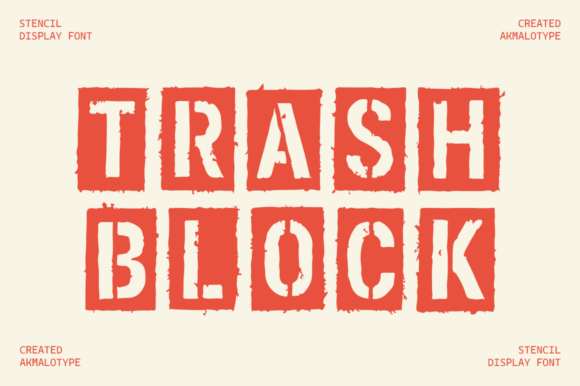
Typography usually aims for perfection. We spend hours kerning, aligning, and smoothing out curves to achieve visual harmony. But sometimes, perfection is exactly what kills the vibe. When you are working with raw materials like denim or creating designs meant to be stitched into fabric, a pristine sans-serif can feel sterile and out of place. This is where Trash Block enters the conversation. It is a uniquely fractured square display typeface that embraces imperfection as a functional design element rather than a flaw.
Crafted specifically to enhance denim fabrications and embellish embroidery designs, Trash Block isn't just another grunge font sitting in your library. It is a tool built for texture. The fractured edges and blocky structure mimic the natural wear of heavy fabrics and the tactile reality of thread on cloth. For creators, entrepreneurs, and designers aged 20 to 50 who are tired of generic aesthetics, this typeface offers a way to inject genuine character into projects without resorting to artificial distressing filters.
Why Texture Matters in Digital and Physical Design
To understand when to use Trash Block, you have to understand the problem it solves. In fashion design and streetwear branding, there is often a disconnect between the digital mockup and the physical product. You might design a logo on a smooth vector canvas, but when it gets embroidered onto a heavyweight denim jacket, the crisp lines look wrong against the weave of the fabric.
Trash Block bridges this gap. Its geometry is intentionally broken. The "fractures" in the letterforms aren't random noise; they are designed to interact with background textures. When you place this font over a high-resolution scan of indigo denim, the gaps in the letters allow the fabric texture to breathe through the typography. This creates a cohesive visual language where the text feels like it belongs to the material, not just pasted on top of it.
Elevating Denim Fabrications and Streetwear
For fashion designers and small clothing brand owners, the application is immediate. Denim is a rebellious, living material. It fades, rips, and molds to the wearer. Your typography needs to match that energy. Using Trash Block for back prints, pocket tags, or interior lining graphics ensures the branding ages well alongside the garment.
Consider a scenario where you are designing a capsule collection focused on upcycled vintage workwear. A clean Helvetica would scream "modern corporate," clashing with the heritage aesthetic. Trash Block, with its industrial yet degraded square forms, reinforces the narrative of durability and history. It signals to the customer that the piece has a story, even if it’s fresh off the rack. This subtle psychological cue can increase perceived value and brand authenticity.
Embroidery and Tactile Applications
Embroidery digitizers face a unique challenge: translating pixels into stitches. Highly detailed fonts often result in messy stitch paths, excessive jump stitches, or thread breaks. While Trash Block looks complex visually, its block-based foundation actually lends itself well to digitization when used correctly.
The fractured nature of the font mimics the organic inconsistencies of hand-stitching or vintage machine embroidery. When you are setting up a patch design or a chenille appliqué, Trash Block provides a built-in texture that reduces the need for manual distressing in your digitizing software. Instead of trying to make a perfect font look worn, you start with a typeface that already understands the assignment. This saves time during the sampling phase and results in a more authentic final product.
- Patch Design: Ideal for biker vests, military-style jackets, and festival gear where bold, readable, yet weathered text is required.
- Chenille and Toweling: The blocky weight supports thick pile fabrics without losing legibility.
- Mixed Media: Works exceptionally well when combined with screen printing and direct-to-garment (DTG) techniques on textured substrates.
Beyond Fashion: Editorial, Posters, and Digital Branding
You don’t need to be sewing to benefit from this typeface. Graphic designers, bloggers, and marketers working in lifestyle niches can leverage Trash Block to create striking visual hierarchies. Because it is a display typeface, it demands attention. It works best at large sizes—headlines, poster titles, album covers, and social media graphics.
Imagine you are an educator or workshop host creating promotional materials for a pottery class, a zine-making workshop, or an urban gardening course. These topics are hands-on, messy, and human. Standard academic fonts feel too rigid. Trash Block communicates creativity and approachability. It tells potential students that the environment is experimental and safe for making mistakes. Similarly, music promoters for indie, punk, or experimental electronic genres will find the font’s rebellious spirit aligns perfectly with their event's atmosphere.
Practical Considerations Before You Use Trash Block
While versatile, Trash Block is not a universal solution. Understanding its limitations is just as important as knowing its strengths. Here is what you should consider before integrating it into your next project:
- Legibility vs. Style: The fractured details reduce readability at small sizes. Never use this for body copy, fine print, or essential contact information. Reserve it for headlines and short phrases where impact matters more than instant scanning.
- Contrast is Key: Because the letterforms have internal gaps, they rely heavily on contrast against the background. On a busy photographic background, the text might get lost. Always test your design at actual size. If using it digitally, ensure you have a solid color block or sufficient negative space behind the text.
- Pairing Strategy: Trash Block has a massive personality. Pair it with neutral, clean sans-serifs or simple monospaced fonts to let it shine. Avoid pairing it with other decorative or grunge fonts, as the combination will look chaotic and unprofessional.
- Licensing and Usage: Always verify the license terms for your specific use case. If you are a freelancer designing for a client, ensure the license covers commercial merchandise or apparel production. Personal licenses rarely cover products intended for resale.
Real-World Workflow Integration
For freelancers and agency designers, efficiency matters. Trash Block can actually speed up your workflow by reducing post-production manipulation. Instead of applying three different Photoshop actions to degrade a standard font, you simply type with Trash Block and adjust the tracking. The "grunge" is baked into the vector data, meaning it scales infinitely without pixelation or artifacting issues common in rasterized textures.
This scalability is crucial for multi-format campaigns. You might use the same headline treatment for a massive billboard, an Instagram story, and a woven label. With a raster-based distressed effect, you’d need multiple resolutions. With Trash Block, one file serves all mediums, maintaining consistency across touchpoints.
Unleashing Creativity Through Constraint
The true value of Trash Block lies in how it forces you to think differently about layout. Its unconventional charm challenges the grid. You might find yourself rotating text, overlapping elements, or playing with extreme scale to accommodate the fractured forms. This friction is productive. It pushes you away from safe, template-based design and toward something bespoke.
Whether you are a hobbyist customizing your own denim jacket, a marketer launching an edgy beverage brand, or a publisher designing a zine cover, Trash Block serves as a catalyst. It embodies a spirit of creativity unleashed, proving that sometimes the most effective way to communicate is to break the rules of traditional typography. By choosing a typeface that resonates with the physical reality of your medium, you create work that feels tangible, intentional, and authentically rebellious.